Galaxy S27 Launch Could Move Up to January. Here’s What That Means for Your Upgrade
A new report says the Galaxy S27 could launch in January 2027, weeks ahead of the S26. The Ultra's chip and memory costs are the wild cards.

In this article
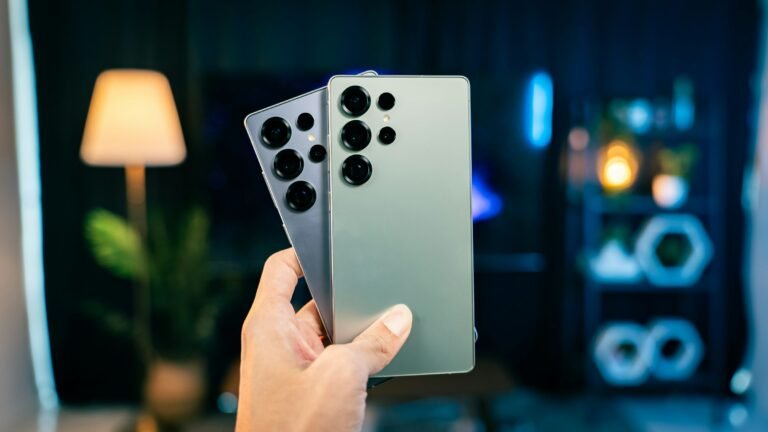
Samsung may be about to undo one of its own recent habits. A fresh report from Korean tipster Lanzuk, who posts as yeux1122 on Naver, says the Galaxy S27 series is now targeting a January 2027 launch, with “February at the latest” as the fallback. That would put the next Galaxy flagships in stores several weeks earlier than the Galaxy S26, which Samsung didn’t unveil until February 25, 2026.
Samsung hasn’t announced anything, and it rarely confirms dates until the invites go out. But the claim is specific enough, and lines up with enough of what we already know about the S27, that anyone planning a phone purchase between now and spring should pay attention.
What the Galaxy S27 launch report actually says
According to Lanzuk, Samsung has locked in the key components for the base Galaxy S27 and the Galaxy S27 Plus, and the project has moved into what the tipster calls schedule management. In plain English: the parts list is settled and the remaining work is about hitting dates. Android Headlines, which picked up the post in English, describes mass production as “within sight.” Nokiamob and Gagadget have reported the same claim.
The bigger models are less settled. Samsung is reportedly still weighing whether to give the Galaxy S27 Pro and Galaxy S27 Ultra faster LPDDR6 RAM and UFS 5.0 storage. Both would be real upgrades. Both would also cost Samsung more at a moment when memory prices are climbing fast, and when the company has reportedly asked suppliers to cut smartphone component supply by as much as 30%.
That tension is the whole story in miniature. Samsung wants to move early. Its two most expensive phones are the ones most likely to hold it back.
Samsung has done January before. Here’s the track record
An early launch wouldn’t be new territory. Samsung spent most of this decade bouncing between January and February, and the S26’s late-February debut was the outlier, not the rule.
| Phone | Unpacked date | Month |
|---|---|---|
| Galaxy S21 | January 14, 2021 | January |
| Galaxy S22 | February 9, 2022 | February |
| Galaxy S23 | February 1, 2023 | February |
| Galaxy S24 | January 17, 2024 | January |
| Galaxy S25 | January 22, 2025 | January |
| Galaxy S26 | February 25, 2026 | February |
| Galaxy S27 (rumored) | January 2027, February at the latest | January |
If Samsung does land in January, the S27 would arrive roughly a month or more ahead of the S26’s schedule. Gagadget, citing a SamMobile report, says the motivation is lining up better with rivals’ product calendars. Samsung typically sends invites two to three weeks before an Unpacked event, so a mid-January show would mean invitations around the turn of the year.
Not everyone thinks January is smart. Alexander Maxham at Android Headlines argues February is the better slot: a launch right after CES gets drowned out, while one just ahead of MWC gets the stage to itself. He has a point. Then again, Samsung’s January launches for the S24 and S25 didn’t seem to hurt sales.
The Ultra is the wild card
Here’s where the timeline could slip. Pre-production testing of the Galaxy S27 Ultra has reportedly been delayed by heat issues with Qualcomm’s Snapdragon 8 Elite Extreme Gen 6. If those don’t get sorted, the reports say Samsung could fall back to its own Exynos 2700 for the Ultra.
Treat that part with real skepticism. Qualcomm has publicly called the overheating rumors “inaccurate,” and nothing independent has backed them up. The sources agree on one thing, though: the Ultra’s chip is the least settled piece of the whole lineup, and if any model pushes the launch toward February, it’s that one.
There’s also a scenario where Samsung splits the difference. Gagadget floats the idea that Samsung could delay the Pro and Ultra rather than raise their prices to cover pricier memory. That’s speculation, but it’s the kind of compromise that would let the S27 and S27 Plus hit January while the expensive models trail behind.
What the Galaxy S27 lineup and prices could look like
The S27 family is expected to grow to four phones: Galaxy S27, S27 Plus, a new S27 Pro, and the S27 Ultra. Leaked U.S. starting prices so far point to $899 for the base S27 and $1,399 for the Ultra. Other estimates run higher, from $899 to $999 for the base model and about $1,399 to $1,599 for the Ultra.
I wouldn’t bank on the low end. Samsung already raised Galaxy S26 prices in Korea and the U.S. to offset rising costs, and every report on the S27 notes that memory is getting more expensive, not less. Android Headlines expects prices to rise rather than fall as launch approaches. That matches the pattern: past generations have seen top-model increases of $100 to $200 when component costs jumped.
Should you wait for the Galaxy S27?
It depends on what you’re carrying now.
- If you have a Galaxy S23 or older: Waiting a few months makes sense, especially if January holds. Your phone still works, and a new generation tends to push last year’s models down in price.
- If you were about to buy a Galaxy S26: Look hard at holiday deals. If the S27 lands in January with higher prices, a discounted S26 could be the better value for a lot of people.
- If you want the Ultra specifically: Expect the most uncertainty. The chip question and the memory upgrades could shift both its timing and its price.
- If you’re thinking about trading in: Hold off for now. Trade-in values and preorder bonuses usually look best right around Unpacked, and nothing here is confirmed yet.
My read: a January launch for the S27 and S27 Plus looks plausible, with components reportedly locked and Samsung’s own history of January shows behind it. A January launch for the entire lineup, at prices that match the early leaks, looks a lot less likely. The memory crunch is the variable to watch, and it’s pulling in the opposite direction from Samsung’s calendar.
Sources: Android Headlines, Nokiamob, Gagadget, 9to5Google. Photo by Amanz on Unsplash.

Harish
I am the founder of androidcaptain.com, a tech graduate and writes which covers android, smartphones, apps, software, and the rapidly evolving world of artificial intelligence. I focus on breaking down new technologies, exploring useful features, and helping readers understand how their devices and software can work better for them.