Samsung’s $50 Qi2 Charger Hits 25W on Exactly One Phone, and You Still Need a Case
Samsung's Galaxy Magnet Wireless Charger is $49.99, but only the S26 Ultra pulls the full 25W, and no Galaxy S26 has magnets built in.

In this article
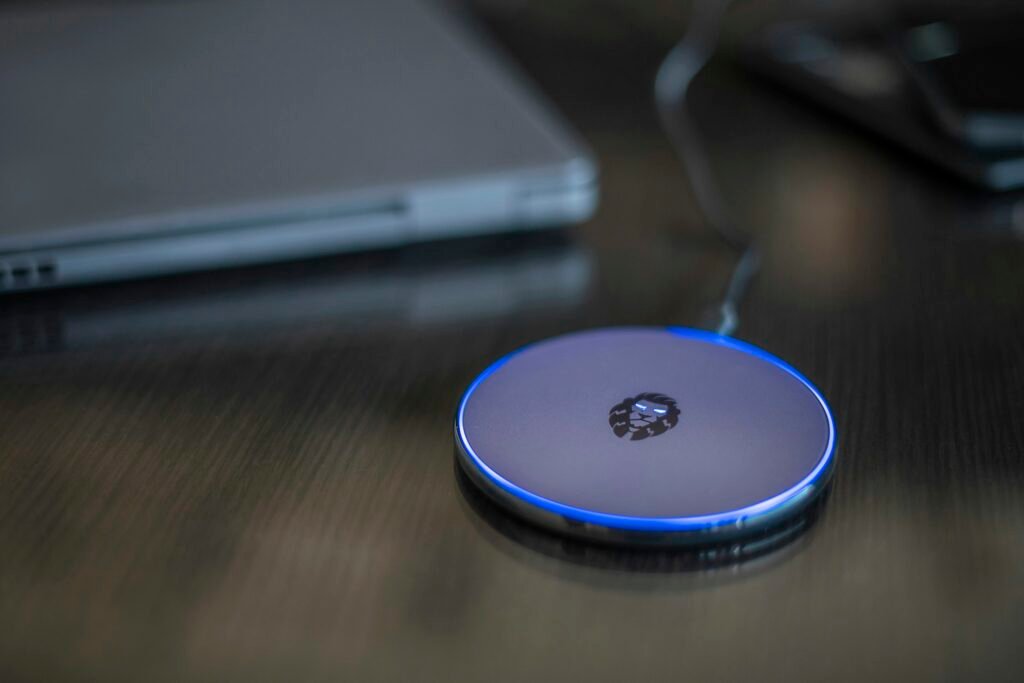
Samsung has a Qi2 charger now. The Galaxy Magnet Wireless Charger is a black puck with a braided USB-C cable attached, it costs $49.99, and there is a bundle with Samsung’s 45W travel adapter at $74.99. It supports the Qi2 25W standard. It is also a more complicated purchase than any of that makes it sound.
Start with what 25W actually means here
Qi2 25W, also called Qi2.2, is the Wireless Power Consortium’s update to Qi2, announced in April 2025. It raises the ceiling from 15W to 25W, tightens magnetic alignment through the Magnetic Power Profile, and adds thermal and dynamic power management so the extra wattage does not just turn into heat.
The ceiling is the key word. Twenty-five watts is what the standard permits, not what your phone takes. On Samsung’s current lineup, three phones get three different numbers.
| Phone | Max wireless charging | Magnets built in? |
|---|---|---|
| Galaxy S26 | 15W | No |
| Galaxy S26+ | 20W | No |
| Galaxy S26 Ultra | 25W | No |
So the 25W figure on the box applies to the S26 Ultra and nothing else in the family. Buy this charger for a base S26 and you are paying $49.99 for 15W — the same speed ordinary Qi2 has delivered for two years.
The case tax
Here is the part that annoys me. No Galaxy S26 ships with magnets in the phone. Samsung built a magnetic charger for a phone line that is not magnetic.
To get the alignment this charger depends on, you buy a Qi2-ready case with a magnet ring, and Samsung’s run $49.99 to $79.99. The standard itself calls for cases under 2mm thick with proper magnet rings to hold full speed. That is not an optional accessory in this setup; it is a required component.
Add it up. The cheapest honest entry price for Samsung’s magnetic charging on an S26 is the $49.99 charger plus a $49.99 case, or $99.98 — and that assumes you already own a 45W adapter. You do not get peak speed without an official Samsung 45W power brick or an equivalent 45W-plus PPS 20V supply. Take the bundle instead and you are at $74.99 plus the case, or roughly $125 all in.
Apple shipped MagSafe magnets inside the iPhone in 2020. Six years later, Samsung is selling the puck and charging you for the magnets separately.
What it does well
Credit where it is due: this thing is not Samsung-only. Because it is Qi2 certified, it works with last year’s Galaxy S25, the new Galaxy Buds, MagSafe iPhones, the Pixel 10 series, the HMD Skyline and anything else carrying Qi2 certification. If you have a mixed-device household, one puck on a nightstand covers several phones, which is more than you could say for most first-party chargers.
The design is sensible too — a captive braided cable rather than a separate USB-C lead to lose, and a small enough footprint to live on a desk without taking over.
Should you buy it
If you have an S26 Ultra and you already own a magnetic case and a 45W brick: yes, this is the straightforward way to get 25W wireless on your desk, and $49.99 is in line with what third parties charge for certified Qi2 25W pucks.
If you have a base S26 or S26+: skip it, or at least shop around. You are capped at 15W or 20W regardless of what the charger can deliver, and plenty of certified Qi2 pads will hit those numbers for less than fifty dollars. Spend the difference on the case you are going to need anyway.
And if you are shopping for someone else’s Android phone, check its spec sheet for Qi2 support before you buy anything with a magnet in it. The logo on the charger tells you what the charger can do. It tells you nothing about the phone.
Sources: PhoneArena, GSMArena, UGREEN. Photo by Georgi Dyulgerov on Unsplash.

Harish
I am the founder of androidcaptain.com, a tech graduate and writes which covers android, smartphones, apps, software, and the rapidly evolving world of artificial intelligence. I focus on breaking down new technologies, exploring useful features, and helping readers understand how their devices and software can work better for them.