Bose’s $99 Wired Earbuds Put Noise Canceling on a USB-C Cable, and Nothing Needs Charging
Bose's first wired earbuds in 11 years plug into USB-C, add real noise canceling and cost $99. Here's who should actually buy them.

In this article
Bose just launched a pair of earbuds with no battery, no Bluetooth and no charging case. That sounds like a step backward until you read the rest of the spec sheet: active noise canceling, a transparency mode, lossless USB audio and a $99 price tag.
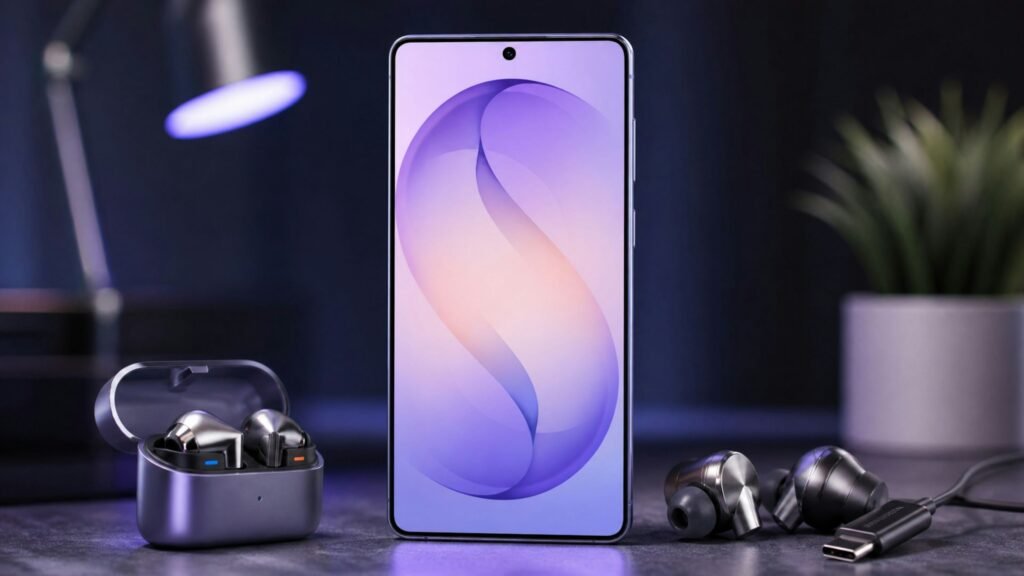
The new Bose Noise Cancelling Wired Earbuds plug straight into the USB-C port on your Android phone. According to Tom’s Guide, they are the company’s first wired earbuds in 11 years. Pre-orders are open now at Bose.com and Best Buy, with shipping starting Oct. 15.
What $99 gets you
The pitch is simple: Bose’s noise canceling, powered by the phone you’re already carrying. Each earbud has two microphones, four in total, feeding the ANC system. You get three listening modes, all controlled from a physical in-line remote:
- Quiet Mode for full noise canceling
- Aware Mode to let outside sound in
- ANC Off for plain wired listening
The remote also handles volume, playback and calls, and it has its own microphone on the back for voice pickup. Bose says the buds support lossless audio over the USB Audio Class 2 standard with 24-bit/48kHz output, and they’re rated IPX4 for sweat and splashes. The cable runs 4.2 feet.
Fit options are generous for the price: small, medium and large silicone ear tips, plus medium and large stability wings that you can mix, match or skip entirely. A zippered carry case is in the box. Colors are Black with a blue accent, White Smoke with a lime green accent, and a limited-edition Dewdrop Mint.
No app is required and there is nothing to pair. Bose says they work with USB-C phones, tablets and computers.
Why wired is suddenly a product category again
Bose isn’t guessing about demand. Raza Haider, president of Bose Premium Consumer Audio, said in the launch announcement that “wired earbuds are experiencing a cultural renaissance.” Tom’s Guide cites Circana data showing wired headphone sales surging in the back half of 2025.
For Android owners there is a practical case beyond nostalgia. Wireless earbuds age badly because their tiny batteries do. Bluetooth pairing still flakes out when you hop between a phone, a laptop and a tablet. And a wired connection gives you low latency for games and video without worrying about which codec your phone supports. Bose’s version removes the one big objection to going wired, which used to be giving up noise canceling.
The catch: it’s USB-C only
There is no 3.5mm version. That matters in two ways. First, while these are plugged in, your phone’s only port is busy, so you can’t charge and listen at the same time without a splitter. Second, as 9to5Google points out, the USB-C design means you can’t route them through a personal DAC or headphone amp setup. Audiophiles who already carry a dongle DAC should look elsewhere.
We’d also like to see how the in-line controls behave across different Android phones once units ship. Bose says its digital signal processing keeps the output consistent across sources, which is the right promise. We’ll believe it after testing on a few Pixels and Galaxies.
Should you buy them?
If you commute, fly often or keep a pair of earbuds in a work bag as a backup, yes, these make a lot of sense. At $99, they cost far less than Bose’s wireless flagships, they will never die mid-flight because you forgot to charge the case, and they bring real noise canceling to a category that mostly offers cheap passive buds.
If you need to charge your phone while you listen, or you already own good wireless ANC earbuds, you can skip them. For everyone else, this is one of the smartest Android accessories of the fall.
Sources: Bose, 9to5Google, Tom’s Guide. Photo by Harold Hisona on Unsplash.

Harish
I am the founder of androidcaptain.com, a tech graduate and writes which covers android, smartphones, apps, software, and the rapidly evolving world of artificial intelligence. I focus on breaking down new technologies, exploring useful features, and helping readers understand how their devices and software can work better for them.