Best Android Phones Under $500 Right Now — and the One Phone Worth Breaking the Budget For


In this article
Budget phone shopping used to mean picking your poison: good camera, weak chip, no wireless charging, pick two. That’s changed. The sub-$500 tier in the US right now has three phones worth actually cross-shopping — the Google Pixel 9a, the Samsung Galaxy A56 5G, and the OnePlus 13R, which technically breaks the $500 ceiling but earns a spot in this conversation anyway. I’ve pulled together specs, pricing, and the verdicts of reviewers who’ve spent real time with all three, and the results aren’t close in the way you might expect.
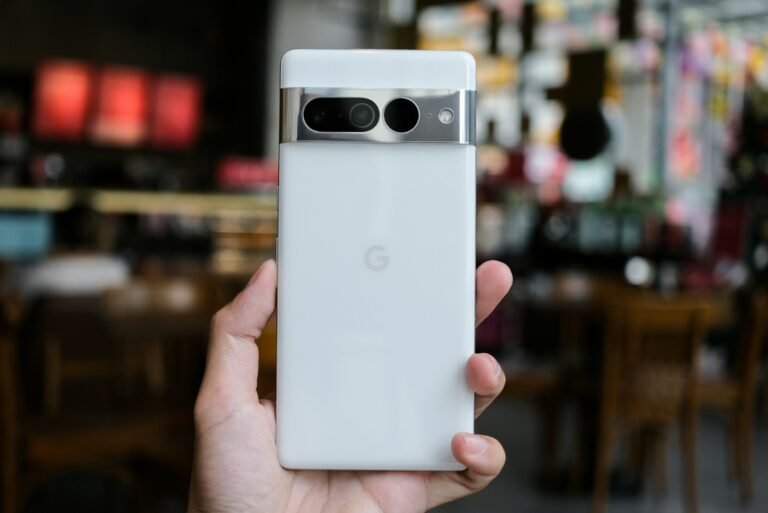
Google Pixel 9a: still the one to beat
At $499, the Pixel 9a remains the phone I point most people toward, and it’s not particularly close. Android Authority called it flatly “the best $500 phone that I’ve ever tested,” and after living with Google’s mid-ranger for a year and a half of real-world reports, that holds up. The Tensor G4 chip won’t win benchmark fights against Snapdragon flagships, but the 6.3-inch pOLED display (2,700 nits peak, 120Hz) looks better than anything else at this price, and the 5,100mAh battery is the real story — in controlled testing it outlasted both the iPhone 16e and the pricier Galaxy S24 FE despite a similarly sized cell.
The 48MP main camera with a 13MP ultrawide isn’t going to embarrass a Pixel 10, and Google’s computational photography still does more with less hardware than anyone else in the segment. You get seven years of OS and security updates, IP68 water resistance, and wireless charging — a feature Samsung and OnePlus both strip out of their comparable phones. The trade-offs are real but minor: no telephoto lens, and 23W wired charging that feels slow next to OnePlus’s numbers.
Galaxy A56 5G: skip it, even at the same price
Samsung’s A56 launched in March 2025 at $499.99 with a 6.7-inch Super AMOLED panel, a 50MP main camera, and Gorilla Glass Victus Plus — on paper, a fair fight with the Pixel. In practice, reviewers have not been kind. Android Authority’s verdict was blunt: “buy something else.” The Exynos 1580 chipset underperforms against both the Tensor G4 and the Snapdragon in the OnePlus, and the phone is stuck in what that review called “no-man’s land” between Samsung’s own Galaxy S25 FE above it and cheaper, better-value competitors below it.
The camera setup doesn’t help the case. Instead of a telephoto lens, Samsung includes a 5MP macro sensor nobody asked for, which effectively makes this a two-camera phone wearing a three-camera badge. There’s no wireless charging despite 45W wired speeds, and video quality lags the competition. It’s not a bad phone in isolation — it’s a phone that happens to share a price tag with two better options.
OnePlus 13R: pay $100 more, get a different tier of phone
The OnePlus 13R runs $599.99, which puts it above this article’s nominal ceiling, but it’s worth knowing about because it answers the question “what do I get for $100 more?” pretty emphatically: a full Snapdragon 8 Gen 3 flagship chip, a 6.78-inch 120Hz AMOLED display, a 6,000mAh battery, and 80W wired charging that gets you from empty to full in well under an hour. PhoneArena scored it 6.8/10 and called it a phone that “punches above its weight class,” and the telephoto lens — a real 50MP 2x optical zoom — is the upgrade the Galaxy A56 desperately needed and doesn’t have.
It’s not perfect. Battery life is oddly worse than its predecessor despite the bigger cell, there’s no wireless charging here either, video stabilization is shaky in motion, and low-light photos fall behind the Pixel. But if raw performance and a big, fast-charging battery matter more to you than Google’s camera processing, the 13R is the phone that makes the extra $100 feel justified.
The comparison, side by side
| Spec | Google Pixel 9a | Samsung Galaxy A56 5G | OnePlus 13R |
|---|---|---|---|
| Price | $499 | $499.99 | $599.99 |
| Chip | Tensor G4 | Exynos 1580 | Snapdragon 8 Gen 3 |
| Display | 6.3″ pOLED, 120Hz | 6.7″ Super AMOLED | 6.78″ AMOLED, 120Hz |
| Battery | 5,100mAh | 5,000mAh | 6,000mAh |
| Charging | 23W wired / 7.5W wireless | 45W wired / none wireless | 80W wired / none wireless |
| Main camera | 48MP + 13MP ultrawide | 50MP + ultrawide + 5MP macro | 50MP + 50MP 2x tele + 8MP ultrawide |
| Water resistance | IP68 | IP67 | Not IP rated for full submersion |
| Reviewer verdict | Editor’s Choice (“best $500 phone”) | “Buy something else” | 6.8/10 (“punches above its weight”) |
The verdict
If you’re spending $500 on an Android phone in fall 2026, buy the Pixel 9a. It’s not the fastest chip in the group, but it’s the most complete phone: best screen for the money, best camera processing, longest software support, and the only one of the three with wireless charging. Skip the Galaxy A56 entirely — same price, worse chip, a camera system that’s really two cameras dressed up as three, and reviewers across the board steering people elsewhere. The OnePlus 13R is the one exception worth considering: if you can stretch to $599.99 and you care more about raw speed, a bigger battery, and a real telephoto lens than you do about camera software polish, it’s a legitimately different tier of phone for not much more money.
My pick for most people: Pixel 9a. My pick if you’re a spec-sheet shopper who charges overnight anyway: OnePlus 13R. My pick for nobody: the Galaxy A56, at least not at full price.
Sources: Android Authority (Pixel 9a review), Android Authority (Galaxy A56 5G review), PhoneArena (OnePlus 13R review), Wikipedia (Galaxy A56 5G release date). Photo by Erik Lucatero on Unsplash.

Harish
I am the founder of androidcaptain.com, a tech graduate and writes which covers android, smartphones, apps, software, and the rapidly evolving world of artificial intelligence. I focus on breaking down new technologies, exploring useful features, and helping readers understand how their devices and software can work better for them.