Android XR Glasses Start at $395, but Prescription Lenses Can Push Them Past $1,000
Android XR glasses from Google, Samsung and Warby Parker start at $395 and ship Dec. 10. Here's what add-ons cost and which phones work.


In this article
Last week the big question about Google’s first Android XR glasses was the price. Now we have it: $395. That’s the starting figure for the Warby Parker frames, and pre-orders opened today, November 12, at glasses.google, with both collections expected to go on sale December 10.
The sticker is friendlier than a lot of people expected. The fine print is where it gets expensive. Add prescription lenses and a couple of common coatings, and these glasses can cost more than a flagship phone.
What Google, Samsung and the eyewear brands are actually selling
Google is calling the line “Intelligent Eyewear.” It’s built with Samsung, and the frames come from two fashion partners:
- Warby Parker: three styles (Alden, Reid and Wren), from $395, sold in the U.S. and Canada.
- Gentle Monster: six designs, from $449, with premium frames up to $489, per Android Central. Sold in the U.S. and South Korea.
Across both brands there are 30 frame-and-color variations. All of them support prescription lenses.
Under the frames, the hardware is identical. There’s a Qualcomm Snapdragon AR1 Gen 1 chip, a 12MP ultra-wide camera with HDR and stabilization, two open-ear speakers and four microphones. Android Central puts the weight at about 41 grams and battery life at up to nine hours, with the charging case holding up to seven extra charges.
What’s missing matters as much as what’s there: there is no display. These are camera-and-audio glasses in the Ray-Ban Meta mold, not glasses with a screen in the lens. You hear Gemini; you don’t see it.
Gemini is the whole pitch
Everything runs through Gemini, triggered with “Hey Gemini” or a tap on the frame. Ask what you’re looking at and it can identify landmarks and objects. Point it at a menu or a street sign and it’ll read or translate it. It can translate a conversation in real time, give Google Maps walking directions, read your notifications aloud, handle calls and messages, and summarize what you missed. Android Central notes it can even capture a whiteboard and summarize it into Samsung Notes.
Privacy is the obvious concern with any camera on your face, and Google has clearly prepared for it. An LED lights up whenever the camera records, and the camera refuses to record if that LED is covered. According to Android Police, Google says visual data sent to Gemini isn’t used for AI training or ad targeting, and bystanders’ faces are blurred before processing. Those are good defaults. Whether people around you trust a small LED is another matter.
The real price: what add-ons cost
9to5Google walked through the Warby Parker and Gentle Monster configurators, and the numbers climb quickly. Here’s what the most common Warby Parker (Reid) upgrades add to the $395 base:
| Warby Parker add-on | Extra cost |
|---|---|
| Single-vision prescription | +$100 |
| Readers | +$100 |
| Progressives | +$330 |
| Light-responsive (transition) lenses | +$125 |
| Thinner lenses | +$60 |
| Blue-light filtering | +$50 |
| Polarized | +$50 |
| Anti-reflective | +$35 |
Non-prescription Reid frames with transition lenses come to $520. A progressive, polarized pair with thinner and anti-reflective lenses hit $1,080 in 9to5Google’s test.
Gentle Monster’s pricing is simpler and, oddly, cheaper for some upgrades. On the GGS001 01 frame, light-adaptive lenses add $50, a clear or blue-filter prescription lens adds $100, and a light-adaptive prescription lens adds $140. If you need a basic prescription with transitions, that works out to $589, while the same combo on Warby Parker’s $395 Reid lands at $620.
Our take on pricing
Prescription wearers have always paid more for smart glasses, so none of this is shocking. But the gap between “$395” in the headline and what a typical glasses wearer will pay at checkout is wide. If you wear progressives, the floor on Warby Parker is $725, and a well-equipped pair runs past $1,000 before tax.
Will they work with your phone?
Check this before you pre-order. Supported phones are:
- Google Pixel 7 and newer
- Samsung Galaxy phones running One UI 9 (Android 17) or later
- iPhone 13 Pro and later
That’s it for now. Android Police reports other Android flagships, including phones from Xiaomi, Oppo and Honor, aren’t supported. Galaxy owners still waiting on One UI 9 will also have to wait for the update before the glasses will pair. iPhone support is a smart move; it widens the market well beyond Android loyalists, though it’s fair to expect the tightest integration on Pixel and Galaxy.
Should you pre-order?
If you don’t need prescription lenses, own a Pixel 7 or newer or an updated Galaxy, and you’ve been curious about Ray-Ban Meta-style glasses, the $395 Warby Parker pair is a reasonable first-generation bet. You get Gemini’s translation and visual search, which is the most compelling part of the package, without paying for a display.
If you need progressives, or you’re holding out for a screen in your lens, wait. There are no reviews yet, battery life is a claim rather than a tested number, and first-generation hardware usually gets cheaper or better within a year. December 10 isn’t far off, and the early reviews will tell you more than a product page can.
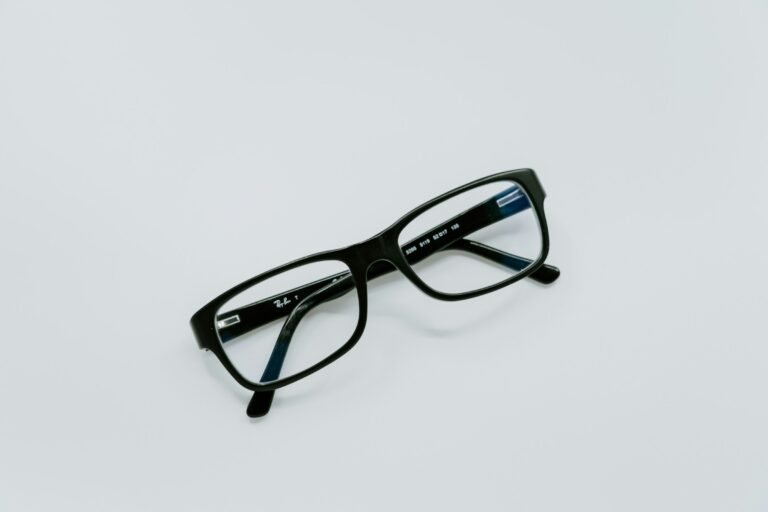
Sources: 9to5Google, Android Police, Android Central. Photo by Zulfugar Karimov on Unsplash.

Sidharth
Hey there ! I am Sidharth Shankar, I am an editor at Android Captain. A computer science engineer with 7 years of experience in the technology field, I cover apps, Reviews, AI features, wearables and hands-on how-to guides for Android users.