Google’s Gemini 4 Argon Is Here, but Your Phone Won’t Get It Yet
Google's new frontier model, Gemini 4 Argon, leads rivals on key benchmarks. It's going to cyber defenders first, with AI Ultra subscribers next in line.

In this article
Google announced Gemini 4 Argon on Wednesday, September 30, and called it its new frontier model, built for what the company describes as “deep reasoning across complex, long-horizon workflows.” On paper it’s the most capable thing Google has shipped. In practice, almost nobody can use it today, and that includes everyone opening the Gemini app on an Android phone this morning.
That gap between the announcement and the rollout is the real story here, so let’s take both halves in turn.
What Google actually announced
Argon is the first model in the Gemini 4 family. Google is pitching it at software engineering, professional knowledge work, finance, creative writing and cybersecurity. The headline technical change is output length: Argon can produce up to 1 million output tokens in a single response, up from a 64,000-token cap on the previous generation. For comparison, Engadget notes that OpenAI’s GPT-6 Astra tops out at 128,000.
Google also leaned hard on security work. Per Engadget, the company says Argon “can autonomously find, validate, and patch critical software vulnerabilities.” Internally, Google says Argon-powered agents have helped free up more than 300 TiB of memory across its data centers and are migrating large C and C++ codebases to Rust, including more than 800,000 lines for the Fuchsia OS kernel, according to 9to5Google.
The benchmark numbers
VentureBeat counts Argon as leading or tied for the lead on 13 of the 18 benchmarks Google disclosed. A few stand out:
- AutomationBench (business tasks): 51.3%, ranked first
- LVBench (long video understanding): 91.7%
- CWE-bench v1 (security vulnerabilities): 68%, tied for first with Grok 4.7 and GPT-6 Astra
The cleanest head-to-head is DeepSWE v1.1, a software engineering test where all three big labs have published scores:
| Model | DeepSWE v1.1 score |
|---|---|
| Google Gemini 4 Argon | 77.9% |
| Anthropic Claude Opus 5.5 | 74.2% |
| OpenAI GPT-6 Astra | 74.1% |
These are Google’s own figures, so treat them as a starting point rather than a verdict. A three-to-four point lead on one coding benchmark is meaningful, not decisive, and independent testing will matter more once the model is in more hands.
Who can use Argon, and when
Right now, Argon is going to a short list. Google is “beginning rollout to a set of trusted cyber defenders” through what it calls the Fairwind Program, VentureBeat reports, while also taking part in the U.S. government’s voluntary pre-release model access process. Engadget describes Fairwind’s members as governments and trusted partners.
Next in line are paid API customers and subscribers to Google AI Ultra, Google’s top consumer plan. Android Authority says Google will expand to Ultra subscribers once it judges the model “sufficiently robust,” and that free Gemini users should eventually get it too. There’s no date for either. Google’s word is “soon.”
For developers, the pricing is aggressive. Argon launches at an introductory $2 per million input tokens and $10 per million output tokens, with cached input at a 95% discount. After the intro period, that doubles to $4 and $20. VentureBeat calculates the introductory rate at one-fifth of GPT-6 Astra’s price and half of Claude Opus 5.5’s.
What it means for Android users
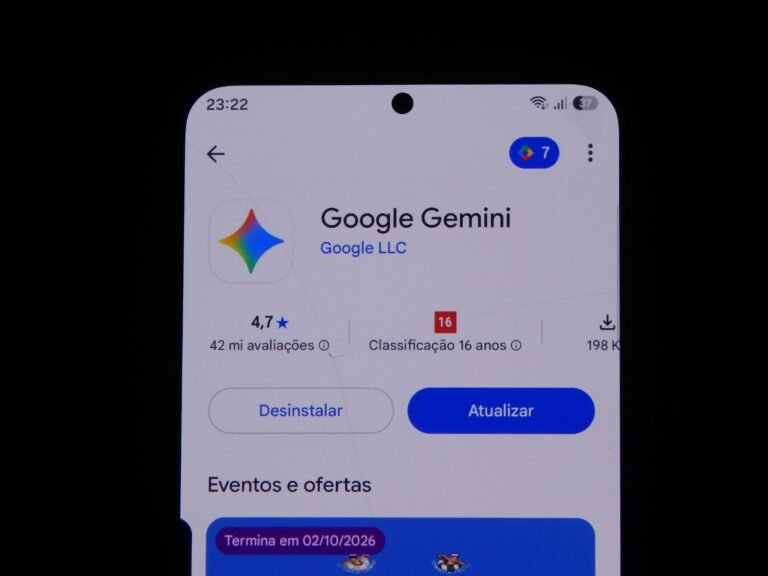
If you use Gemini on a Pixel, a Galaxy or any other Android phone, nothing changes today. The Gemini app still runs on the current models, and Google hasn’t said how Argon will show up in the app or on which plans beyond Ultra.
The cautious rollout is a deliberate choice. Google spent a good chunk of its announcement on misuse monitoring, prompt-injection resilience, sandboxed testing and resistance to model distillation. A model that can find and patch vulnerabilities on its own can, in the wrong hands, find them without patching them. Starting with defenders is the responsible call, even if it makes for an odd launch day.
Our read: Argon matters for Android owners mostly as a preview. Whatever ends up powering Gemini on your phone next year will likely be a smaller, cheaper descendant of this model. Watch for the Ultra rollout first. That’s the signal Google thinks it’s ready for regular people.
Sources: 9to5Google, VentureBeat, Engadget, Android Authority. Photo by Zulfugar Karimov on Unsplash.

Sidharth
Hey there ! I am Sidharth Shankar, I am an editor at Android Captain. A computer science engineer with 7 years of experience in the technology field, I cover apps, Reviews, AI features, wearables and hands-on how-to guides for Android users.